
Seasons, Timing, and What Each One Actually Delivers
No wrong season. Only the one that fits the story you are telling.
Seasonal guides for mountain weddings tend toward vague encouragement. Summer is beautiful. Fall is stunning. The reality at Mt. Baker is more specific and more useful: each season delivers a genuinely distinct visual and experiential character, with distinct access conditions, distinct crowds, and distinct photographic quality. Here is the honest version.
Summer: July through September
Summer is the peak season and the most flexible one. The Mt. Baker Highway is fully open to Artist Point, usually from mid-July forward depending on snowpack. Wildflowers in the alpine meadows above Heather Meadows, lupine and paintbrush and bistort across the hillsides, are at their height in late July and early August. Light lasts until nine in the evening in July. Average daytime temperatures at Glacier are in the 60s and 70s Fahrenheit. Summer fog at elevation is less common but still possible.
The tradeoff: summer weekends at Artist Point attract the most visitors of any season. Midweek elopements at Artist Point in summer can feel entirely private. Saturday at noon in August will not. Photographers who work this location consistently recommend sunrise or late afternoon ceremonies for both the light quality and the crowd situation.
Best for: couples who want accessible alpine terrain, wildflowers, and maximum flexibility on guest activities.
Book by: October or November of the prior year for peak summer weekend dates.
Fall: September through November
Fall is the season the locals return for. The Mt. Baker Highway corridor from Glacier upward transforms in October: the bigleaf maple and vine maple in the understory go amber and copper and red against the permanent dark green of the conifers, and the effect on a clear day is extraordinary. The light drops lower in the sky and becomes warm and raking and useful from morning through afternoon. The Artist Point road typically closes in late October, but the shoulder of the season, September and early October, gives the full fall palette with the highway still open.
Crowds thin dramatically after Labor Day. A Saturday in mid-October at Artist Point will have a fraction of the visitors of the same day in August. The air is crisp and clarifying. Guests who come to fall Glacier weddings almost always extend their stays.
Best for: fall color photographs, fewer crowds, dramatic and unusually warm autumn light, and couples who want the alpine meadows to themselves.
Artist Point road usually closes: late October through early November. The lower highway and Picture Lake remain accessible year-round via the ski area road.
Weather note: Fall temperatures at elevation can drop into the 30s at night and low 40s on cloudy days. Layer your guests accordingly.
Winter: December through March
A winter Mt. Baker wedding is a specific kind of choice and it draws a specific kind of couple. The mountain stripped of its summer softness, covered in snow, frank and enormous against a blue sky on a clear winter day, is a different kind of beautiful from the wildflower meadow. Mt. Baker Ski Area is the snowiest ski area in the United States by some measures, receiving over 600 inches of snow in record years. It is fifteen minutes from Glacier. A winter wedding weekend can include two days of skiing, which changes the entire character of the event.
The Artist Point road closes for winter. Winter ceremonies at Artist Point require a snowshoe approach of approximately 2.7 miles each way. Some couples do this; it requires planning, appropriate gear, and honest assessment of the party’s fitness and willingness. More accessible winter ceremony options include the lower highway areas accessible via the ski area road: Heather Meadows, Picture Lake, and Bagley Lakes all remain reachable in winter and are extraordinary with snow.
Best for: couples who want something uncommon, winter aesthetics, proximity to skiing, and a lodge experience with snow on the ground.
Spring: April through June
Spring in the North Cascades is the loudest season. The waterfalls along the Mt. Baker Highway run at full volume with snowmelt, some audible from the road. The forest floor greens in a way that seems accelerated. The air carries cedar and mud and a specific Pacific Northwest quality of renewal that people spend years trying to describe and rarely manage to.
The Artist Point road is typically closed through June, reopening sometime in mid to late July depending on snowpack. Spring ceremonies at the higher elevations require snowshoe access. The lower highway locations, Nooksack Falls, the river corridor, the cedar forest, and eventually Picture Lake as the snow recedes, are fully accessible and offer some of the most vivid spring photography in the state.
Spring weather is the most variable of the four seasons. Rain and sunshine within the same afternoon is common. The couples who choose spring and decide in advance to let the weather be part of the story consistently produce the most striking images of any season.
Best for: waterfall-forward settings, lush forest photography, couples who love dramatic weather, and anyone who wants the mountain without the crowds.
Full seasonal wedding guide: Seasonal Weddings at Mt. Baker
The Sunrise Question
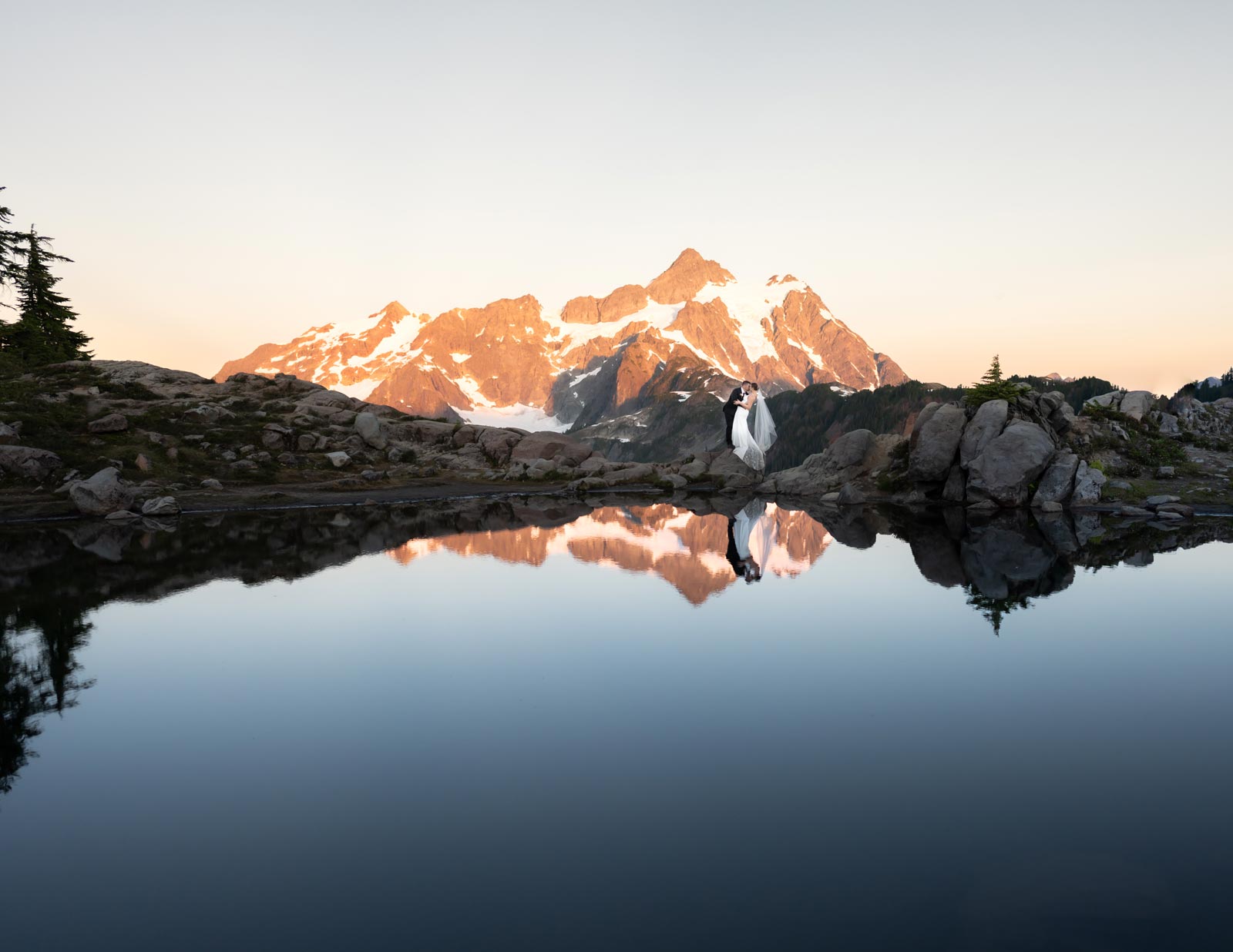
Multiple photographers who shoot at Mt. Baker regularly list sunrise as their preferred time for Artist Point elopements. The reasoning: the light is extraordinary, the crowds have not yet arrived, and the experience of watching the mountain emerge from darkness has no equivalent at any other time of day. Sunrise in July is approximately 5:20am. In September it is closer to 6:45am. Couples who choose sunrise commit to an early alarm and come away with photographs that look unlike anything else from this location.
No wrong season. Only the one that fits the story you are telling.
Next Step
Have a season in mind already?
Peak dates fill far ahead. Reach out as soon as you have a window.